
Culture
What are mascaradas? The masked festival that fills Costa Rica's streets
Giant masks, cimarrona bands and a day of cheerful disorder every 31 October. A short guide to a very Costa Rican tradition.
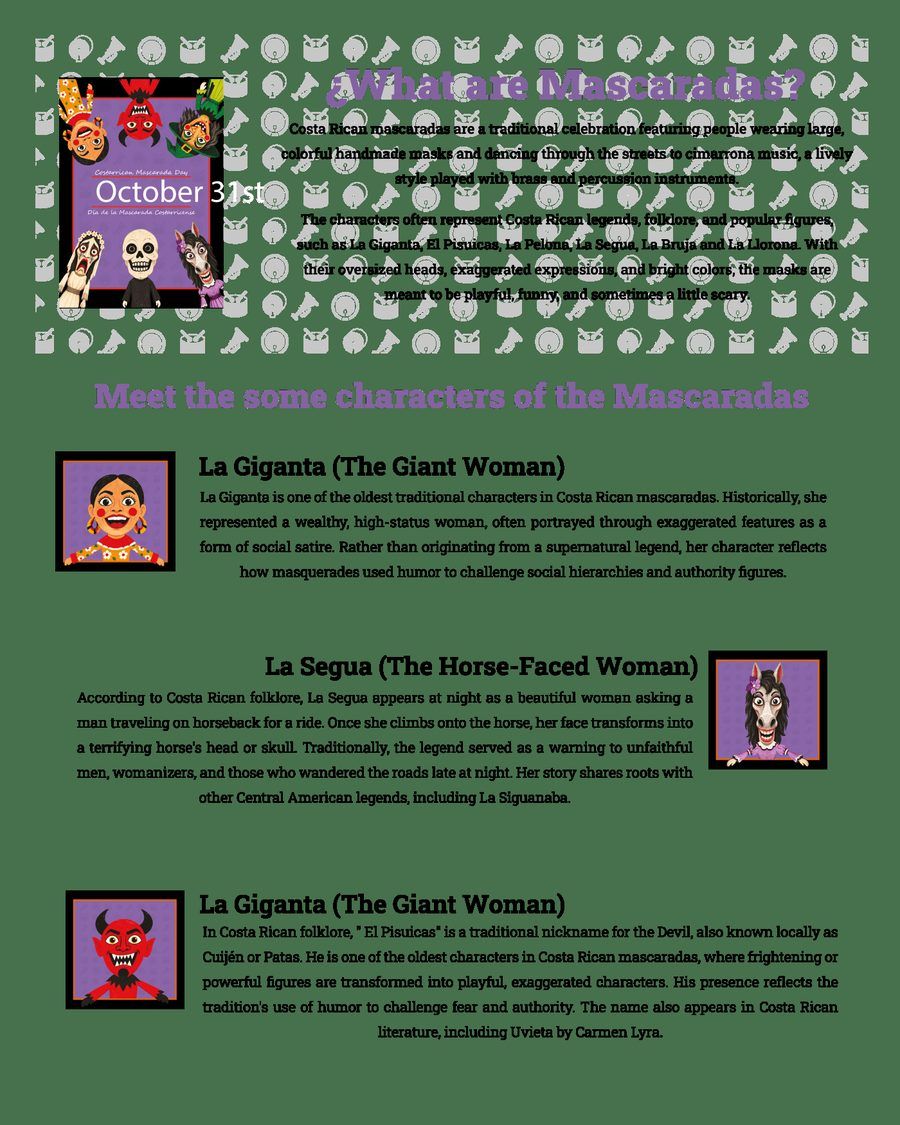
Every 31 October, towns across Costa Rica fill with giant papier-mâché heads. The masks are two metres tall, the bands are loud, and the streets become a cheerful, slightly chaotic parade. This is the Día de la Mascarada, and it is one of the most distinctly Costa Rican things you can witness.
What happens
Masked figures dance through the streets, followed by a cimarrona — a small brass and drum band that plays the same handful of tunes for hours. Children run alongside, adults take photographs, and the masks turn slowly so everyone can see the face.
The masks are not meant to be frightening, though some of them are. They are caricatures: enormous heads with exaggerated features, often based on historical figures, folklore characters or local personalities. The tradition is satirical at heart. Power, beauty and authority all get inflated to two metres and paraded down the street.
The characters
The classic cast includes La Giganta, a giant woman who represents beauty and social status, often with an elaborate painted face. La Segua is a beautiful woman who turns into a horse-faced figure — a warning, in the old stories, to men who follow strangers home. El Pisuicas is a nickname for the devil, a red-faced figure with horns. La Llorona, the weeping woman of Latin American folklore, appears too, along with la Calaca and la Bruja.
Different towns have their own characters, and families of mask makers pass the craft down. The masks are built from papier-mâché over a clay or wire frame, then painted by hand. A good one takes weeks.
Why it matters here
Monteverde is a small mountain community, and the mascarada is one of the ways it keeps a connection to the rest of the country. The same families who grow coffee take part in the parade; the same streets that fill with tourists in high season fill with masks in October.
If you are visiting at the end of October, ask at the coffee shop. Someone will know which town is parading and what time it starts.
If you go
- Go early. The parade moves and the best light is in the late afternoon.
- Keep a little distance from the masks — they are heavy and the dancers cannot see well.
- Bring earplugs for small children. The cimarrona is loud.
- Take photographs, but ask before photographing the mask makers themselves.
The rest of the year, the culture of this place is in the coffee. The farm tour is a good place to start.
Taste the difference on the farm
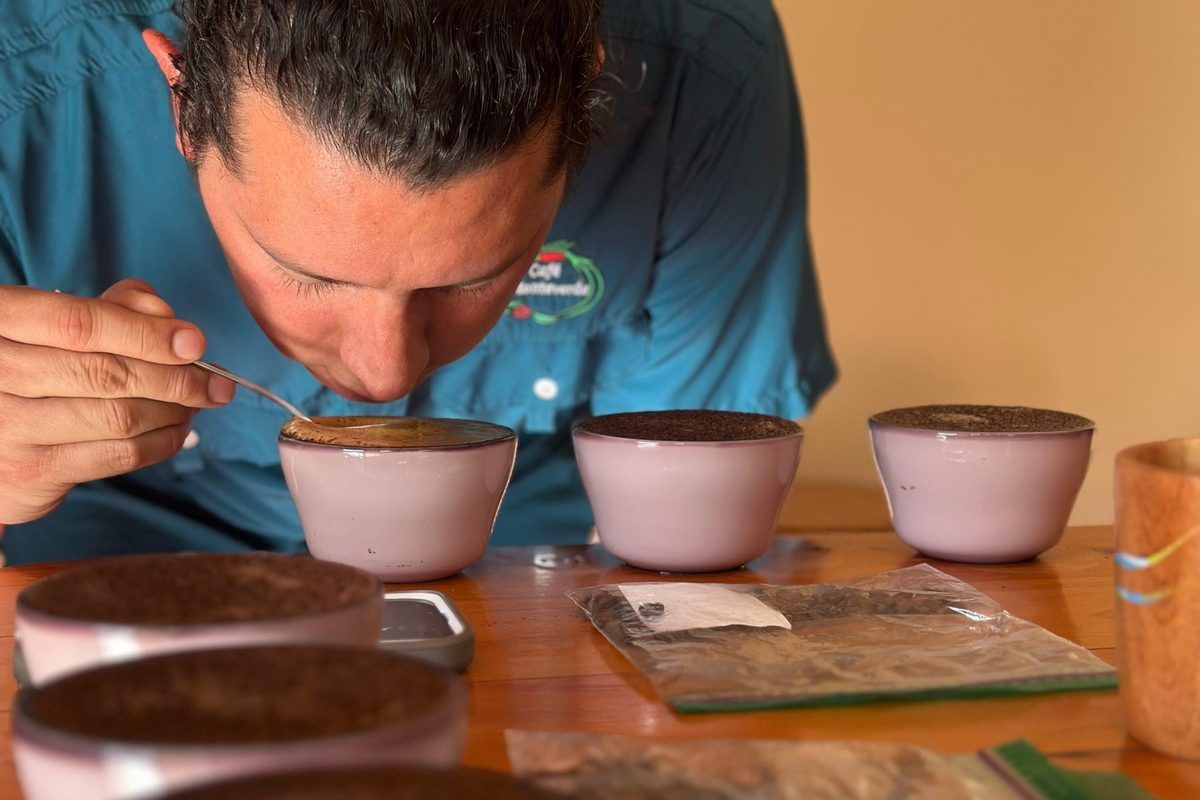
The two-hour tour ends with five coffees from this farm, tasted side by side. It is the fastest way to understand everything in this article.
Common questions
When is the Día de la Mascarada in Costa Rica?
The Día de la Mascarada is celebrated on 31 October, with parades and street performances in towns across Costa Rica, especially in Cartago, Barva and Escazú.
What is a cimarrona?
A cimarrona is a small street band, usually with drums, cymbals and brass, that plays alongside the masked figures in a mascarada. The music is loud, repetitive and designed to be danced to.
What do the masks represent?
Traditional masks depict figures from Costa Rican folklore and colonial history — the Giganta, the Segua, the Pisuicas, the Llorona — often as satirical portraits of power, beauty or authority.
Keep reading
More from the journal
Washed, honey, natural and anaerobic: what coffee processing does to your cup
Four methods, one farm, four completely different coffees. Here is what happens to the cherry after picking, and why it changes the taste.
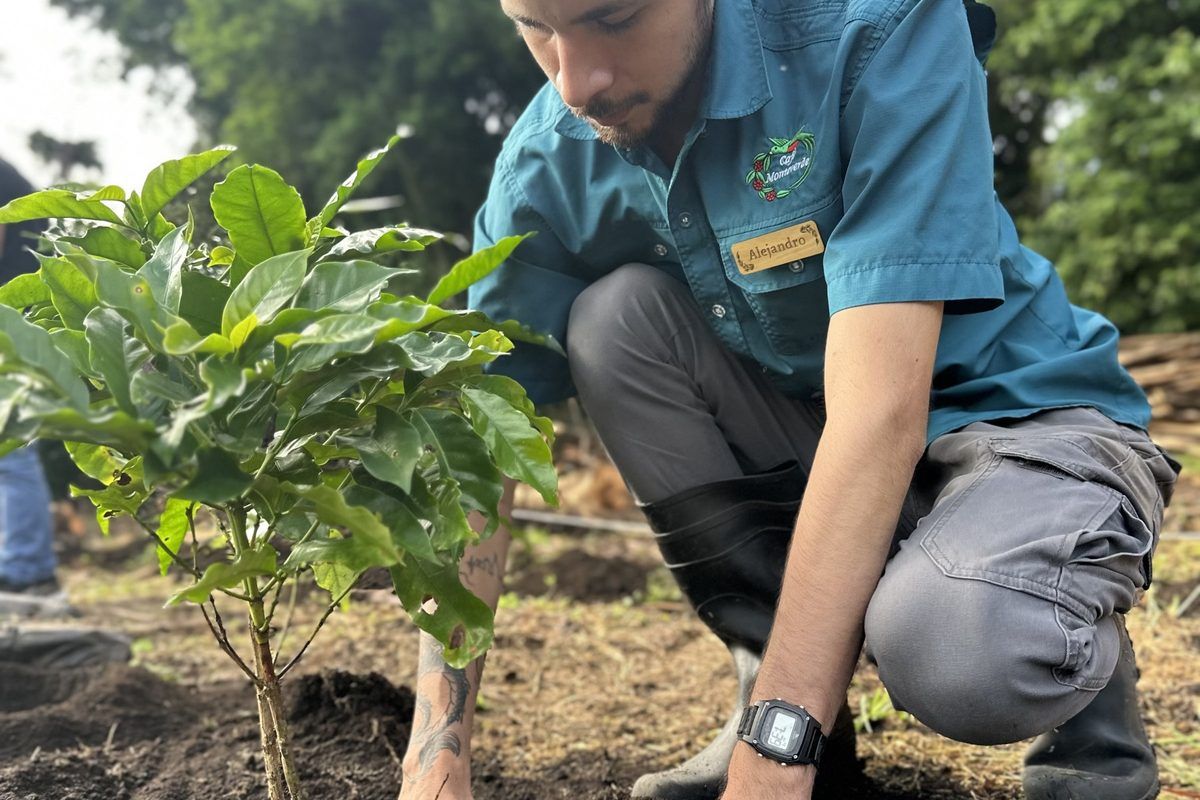
Coffee from seed to cup: eight steps at our Costa Rican farm
From a seedbed in Cañitas to the cup in your hand, eight stages and about three years. A walk through what actually has to happen.
What is specialty coffee, and why does Monteverde suit it?
The 80-point definition, what it leaves out, and the altitude, shade and slow ripening that make Monteverde a specialty origin.