
Our story
Family-grown coffee in the Monteverde cloud forest
Twenty-one families, a mill, a roaster and two coffee shops. We have been growing, processing and roasting coffee in Cañitas since 1990, on land our families have farmed since the 1930s.
Who we are
A cooperative that still farms
Café de Monteverde is the trading name of Unión Varsan de Monteverde, S.A., a group of 21 member families formed in 1990. Our coffee roots here go back to the 1930s, when families from Costa Rica's Central Valley brought coffee into the Monteverde mountains and found a climate that suited it.
Five generations later, the same families still farm the same slopes. What changed is what happens after the harvest: instead of selling cherry to a middleman, we mill, dry, roast and sell our own coffee, and we do the same for around 20 neighbouring farms.
That vertical control is the whole business. It is why the coffee in our Santa Elena shop tastes like the coffee on the drying patio, and why a guide on the tour can tell you exactly which plot your cup came from.
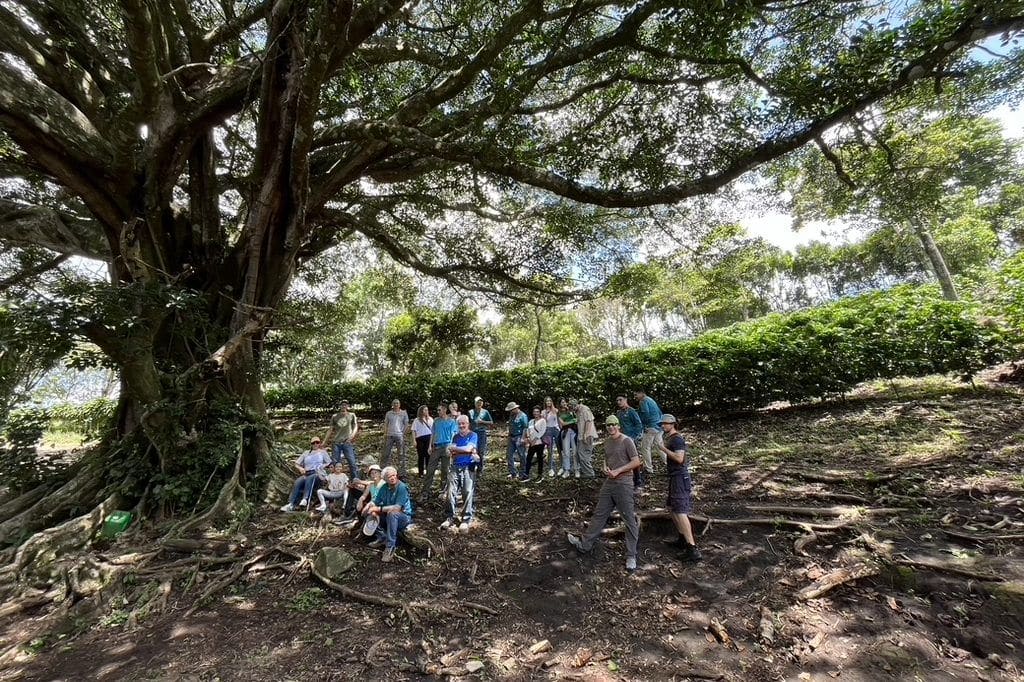
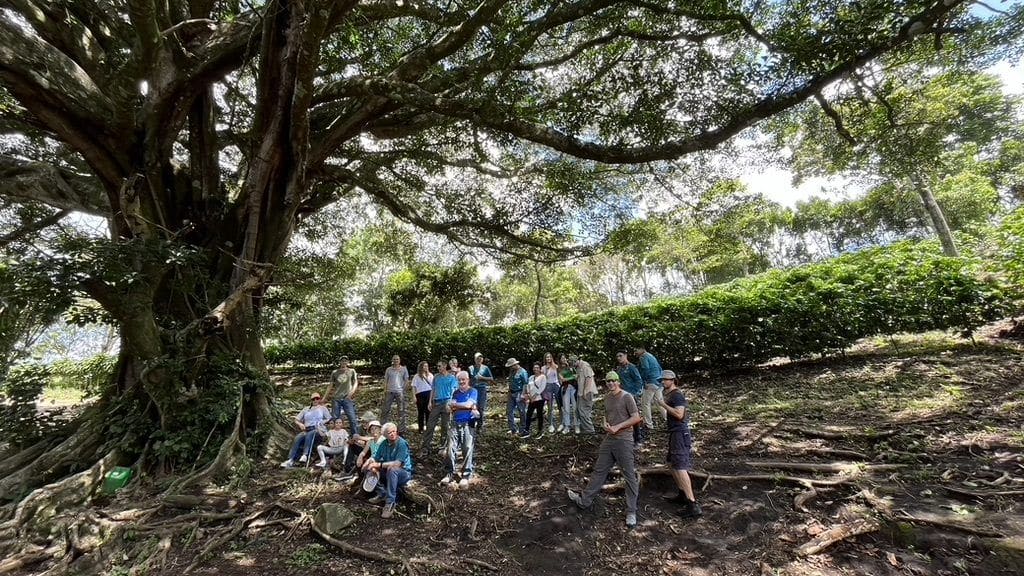
Members of the cooperative at the farm in Cañitas.
The farm
Half coffee, half forest, all one system
The farm sits minutes from the Monteverde Cloud Forest Reserve, between 1,300 and 1,450 metres.
The plots
Caturra, Catuaí and Venecia varieties, planted in rows that follow the slope. Shade trees and forest edges keep the temperature down and the birds around.
The mill
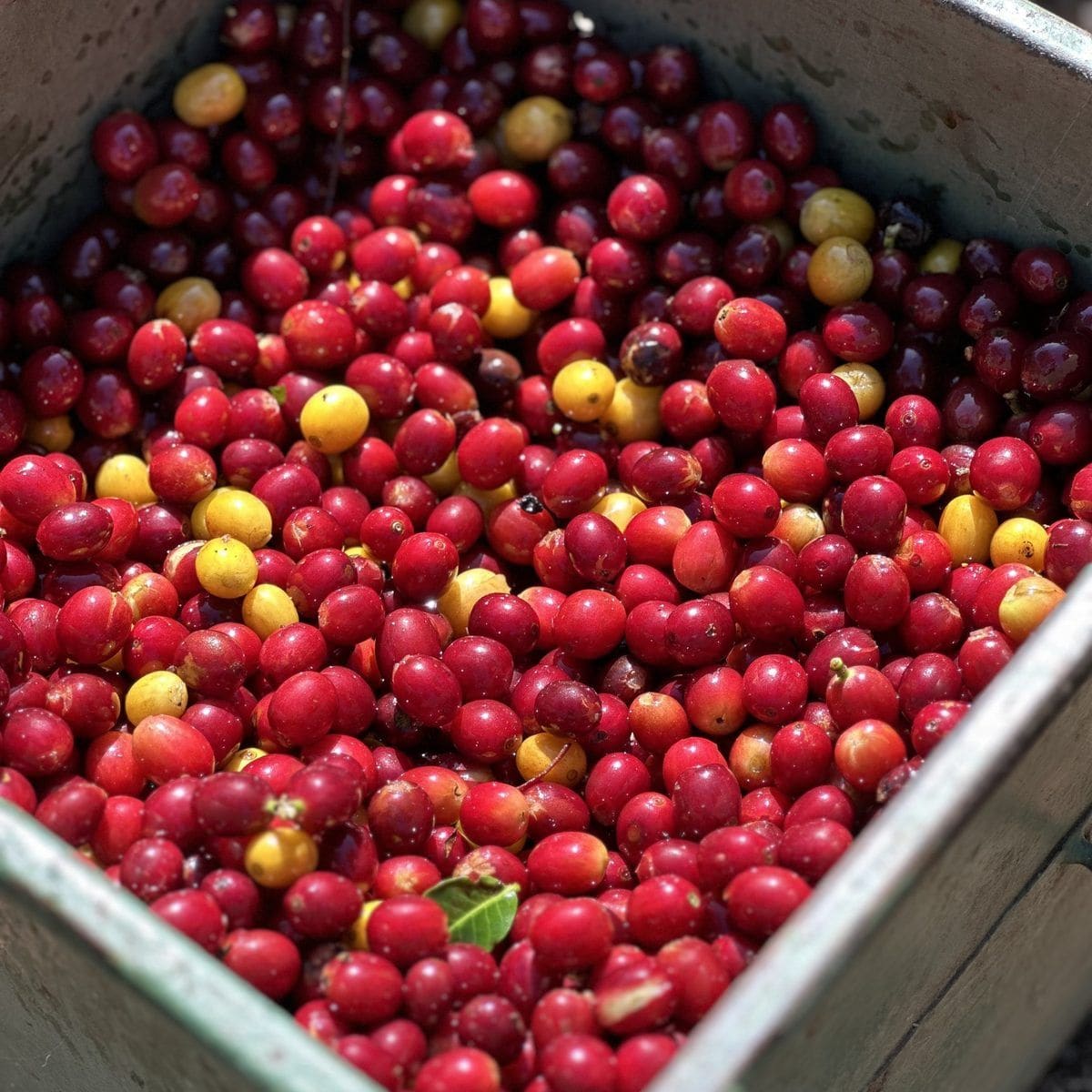
Cherry is received, weighed and depulped on site. Washed, honey and natural lots are separated from the first day, because the process decides the cup.
The drying beds
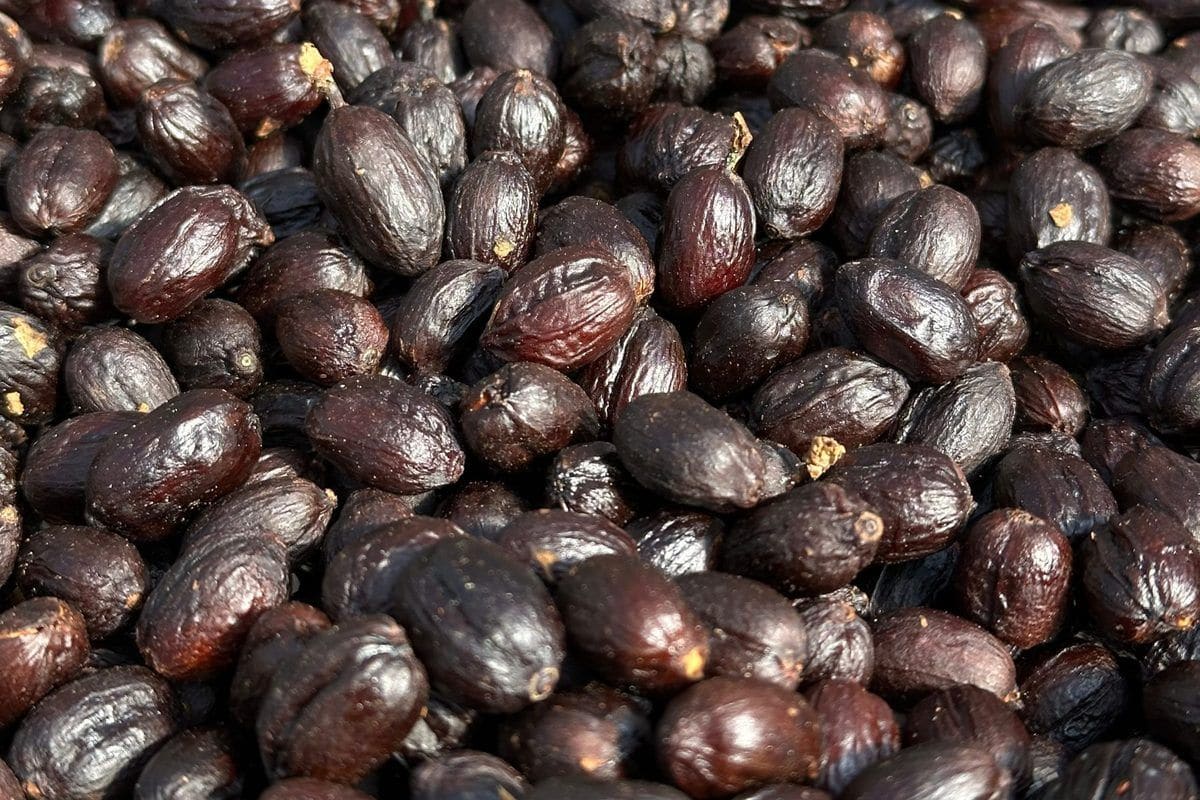
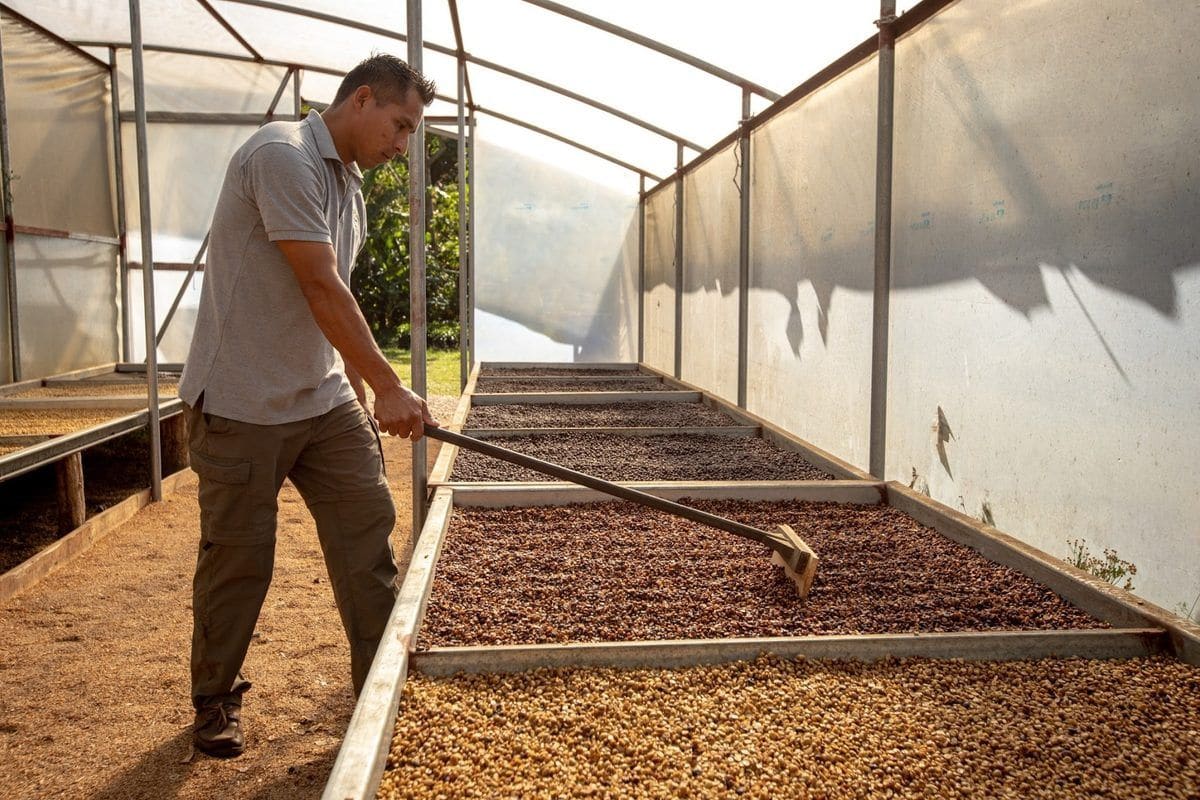
Raised African beds and a covered dryer. Coffee turns by hand for up to two weeks, depending on the weather and the process.
The roastery
Small batches, roasted at origin, cupped before they are sold. The same roaster supplies our shops and our online orders.
The garden and animals
Organic vegetables, goats, pigs and hens. Part of the farm's income and part of what makes it a farm rather than a monoculture.
The forest
Half the land is kept as forest. It protects the water, holds the soil and is the reason the farm is worth visiting in the first place.
Traceability
From germination to export, in one set of records
Every lot is tracked from the seedbed to the sack. We know which plot it came from, when it was picked, how it was processed, how long it dried and how it was roasted. That is unusual for a farm this size, and it is what lets us sell directly into North America and Europe.
- Seedbeds and variety records
- Plot-level harvest and Brix measurement
- Process, fermentation and drying logs
- Cupping scores before a lot is sold
- Direct trade with roasters in North America and Europe
Community
One dollar per visitor, since 2020
Every tour visitor contributes one dollar to the Monteverde Community Fund. It is a small amount per person and a meaningful amount across a year, and it stays in the community that made the coffee possible.
The art tour contributes two dollars per participant to Art on Wheels, a travelling art school that brings classes to communities around Monteverde.
We also host farmer training, school and university groups, and research projects on the farm. Some of that is commercial. Most of it is not.
“Well worth the price, especially given that the money goes back into helping the farm grow sustainably.”
“There are a lot of coffee farms in the area but this one was a top notch experience.”
Education
A classroom that happens to be a farm
Life Monteverde has brought student groups to Cañitas since 2008.
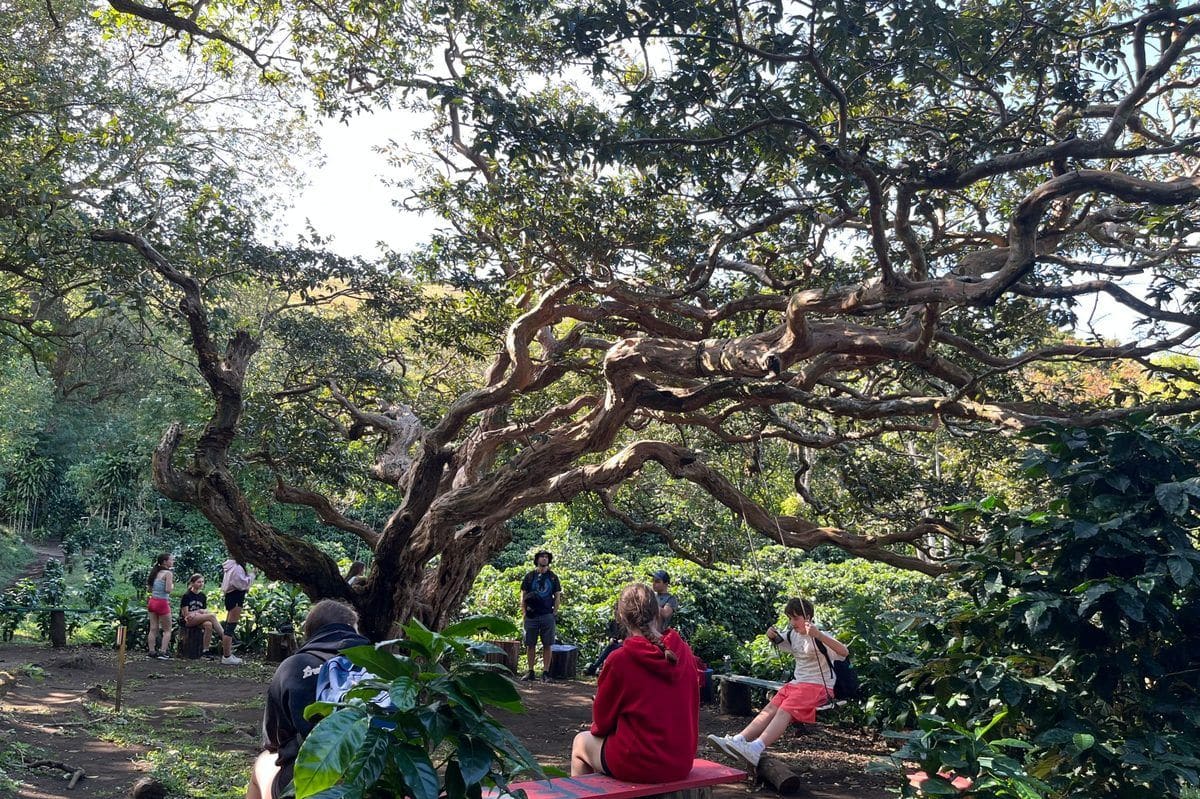
Universities, high schools and volunteer groups come for half a day or a week. They plant trees, build compost, cup coffee and ask the questions that a textbook cannot answer.
Come and see how it works
The farm is ten minutes from Santa Elena. The tour takes two hours and ends with five coffees.