
From the farm
Coffee from seed to cup: eight steps at our Costa Rican farm
From a seedbed in Cañitas to the cup in your hand, eight stages and about three years. A walk through what actually has to happen.
Every cup of coffee represents about three years of work before the first harvest, and then a sequence of steps that each decide whether the coffee is good. Here is what those steps look like at our farm in Cañitas, at 1,300 to 1,450 metres on the edge of the Monteverde cloud forest.
1. The seedbed
Coffee starts in a nursery, in shallow boxes of soil under shade. We select seed from the healthiest plants — Caturra, Catuaí and Venecia are the varieties we grow — and sow them close together. Germination takes six to eight weeks.
This is the first place where quality is decided. A weak seedling becomes a weak plant, and a weak plant produces cherries that never ripen properly.
2. The nursery and planting out
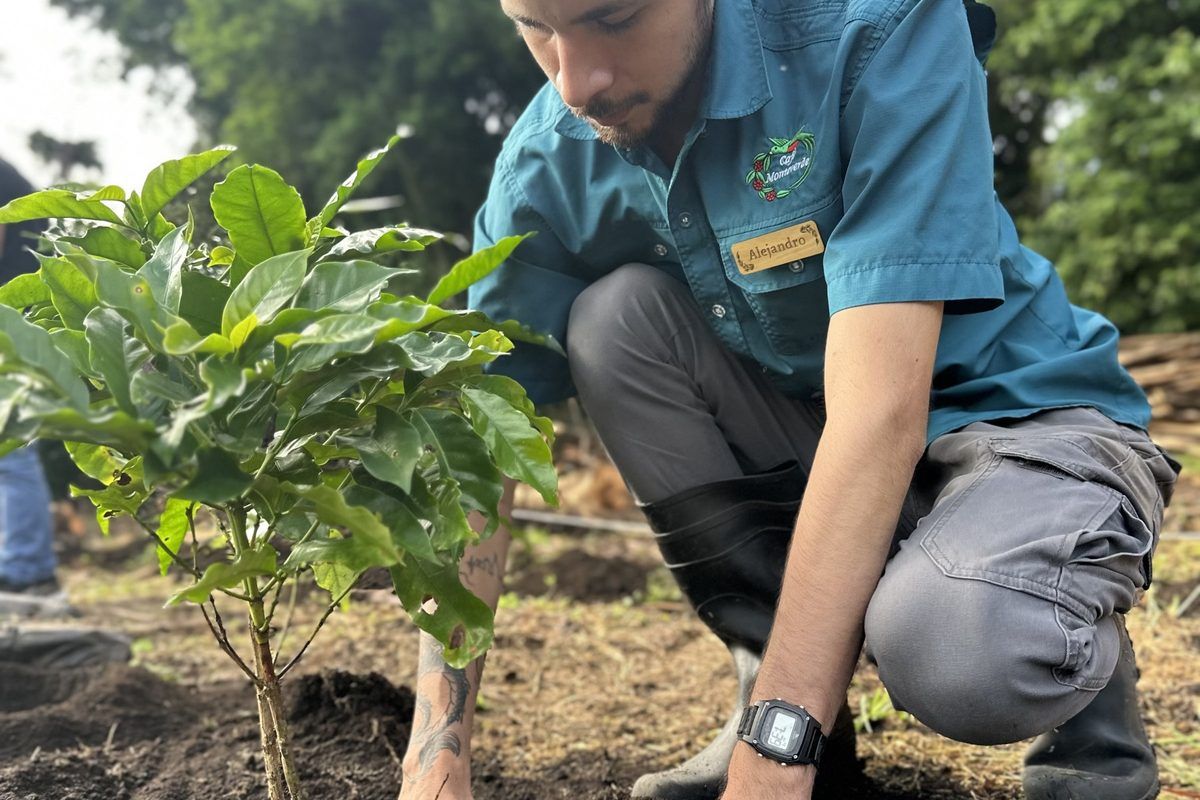
Once the seedlings have four to six pairs of leaves they are moved into bags and kept under shade for several more months, watered and hardened off. When they are about 30 cm tall and the rainy season has started, they go into the ground.
We plant them in rows that follow the contour of the slope, with shade trees and forest edges above. On a farm like ours, half of which is kept as forest, the shade is not decoration: it keeps the temperature down, holds moisture and slows ripening, which is what builds flavour.
3. Growing, pruning and flowering
A coffee plant takes about three years to produce its first real harvest and four to five to reach full production. In between there is pruning, weeding, mulching, and the constant work of keeping the plant healthy without stripping the soil.
Flowering is triggered by rain after a dry spell. The whole farm can flower in a week, and about eight months later those flowers become cherries.
4. Harvest
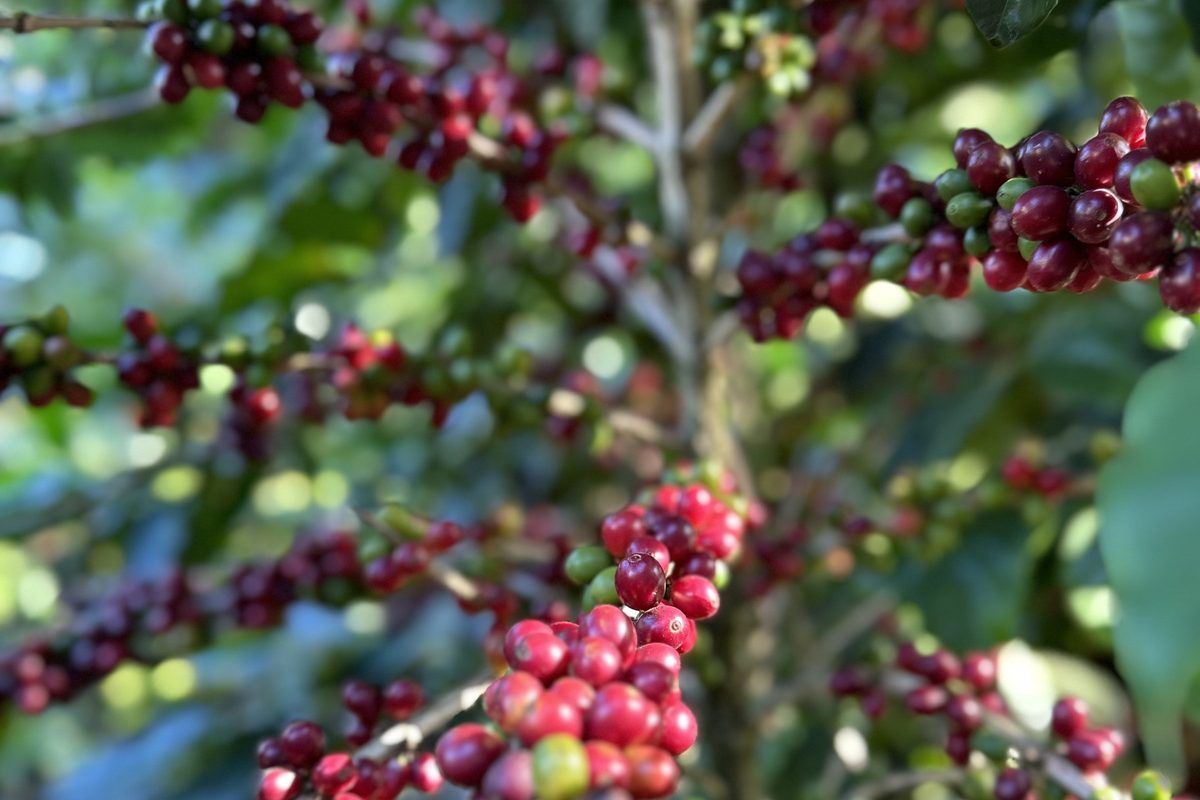
Our harvest runs from October to March. Cherries on the same branch ripen at different times, so we pick by hand, in passes, taking only the ripe red ones. A picker carries a basket at the waist and empties it into a sack under shade so the fruit does not heat up.
This is the step guests remember most from the tour: the moment you realise how much cherry it takes to fill a bag, and how carefully someone had to choose it. It takes roughly 5 kg of ripe cherry to make 1 kg of green coffee, and about 100 cherries to make a single cup.
5. Depulping and fermentation
The cherry goes to the mill the same day it is picked. A depulper removes the skin and most of the pulp. What happens next depends on the process: for washed coffee the mucilage is fermented off in water and rinsed; for honey it stays on; for natural the whole cherry goes to the beds.
Fermentation is the most delicate part. Too short and the mucilage will not come off; too long and the coffee picks up vinegar or rubber. On the farm it is checked by hand, by touch and smell, several times a day.
6. Drying
The seed dries on raised African beds under cover, turned by hand several times a day so that air moves through the layer and the moisture comes out evenly. Washed coffee takes 7 to 12 days, honey 10 to 14, natural 14 to 21.
The target is about 11% moisture. Dry it too fast and the seed cracks; too slow and it moulds. In Monteverde, where the cloud comes in most afternoons, the beds are moved under cover and back out again, sometimes twice a day.
7. Hulling, grading and resting
Once dry, the parchment is removed in a huller, and the green beans are graded by size and density. Defects are sorted out by hand and by machine. The green coffee then rests for a few weeks before roasting, which lets the moisture settle through the bean.
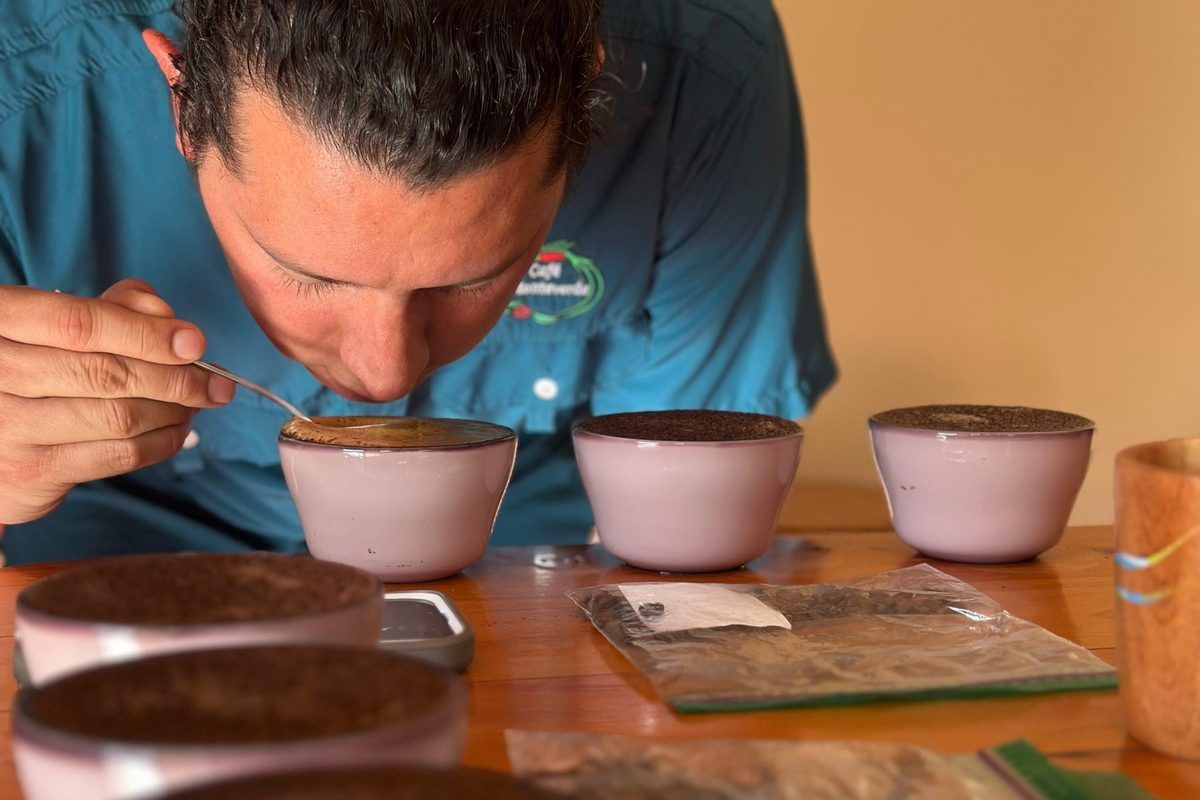
This is also where we cup: the same protocol a buyer would use, with a score sheet, to decide which lots go into which bag and which become microlots.
8. Roasting, grinding and brewing
We roast in small batches at the farm, profiling each coffee to bring out what the process and the plot put in. A light roast keeps the acidity and the origin; a dark roast builds chocolate and body. Then it is ground — or not — and brewed, which is the last place you can ruin three years of work.
On the tour, this is where you come in. The final tasting puts five cups on the table from the same harvest and lets you taste what all of that work did.
The short version
| Stage | Time | What can go wrong |
|---|---|---|
| Seedbed | 6–8 weeks | Poor seed, uneven germination |
| Nursery | 4–6 months | Water stress, disease |
| Growing | 3 years to first harvest | Poor pruning, exhausted soil |
| Harvest | Oct–Mar, several passes | Unripe or overripe cherry |
| Processing | 1–3 days | Over-fermentation |
| Drying | 7–21 days | Mould, cracking, uneven moisture |
| Hulling and grading | Days | Defects left in the lot |
| Roasting | 12–18 minutes per batch | Baked or scorched coffee |
You can see most of these stages in two hours on the farm, from the nursery to the roaster, and taste the result at the end. The tour runs four times a day.
Taste the difference on the farm
The two-hour tour ends with five coffees from this farm, tasted side by side. It is the fastest way to understand everything in this article.
Common questions
How long does it take to grow coffee from seed to harvest?
A coffee seedling takes about three years to produce its first real harvest, and four to five years to reach full production. The plant can then keep producing for 20 to 30 years with pruning and care.
What are the eight steps from seed to cup?
Nursery and germination, planting and growing, flowering and ripening, harvesting, depulping and fermentation, drying, hulling and grading, and finally roasting and brewing.
Why is coffee picked by hand in Monteverde?
Because the terrain is steep and the cherries on a single branch ripen at different times. Hand picking lets a picker take only the ripe red cherries and leave the green ones for the next pass, which is essential for quality.
How long does coffee take to dry?
Washed coffee usually dries in 7 to 12 days on raised beds, honey in 10 to 14, and natural in 14 to 21, depending on the weather. In Monteverde's humidity, beds are turned several times a day and moved under cover when rain comes.
Keep reading
More from the journal
Washed, honey, natural and anaerobic: what coffee processing does to your cup
Four methods, one farm, four completely different coffees. Here is what happens to the cherry after picking, and why it changes the taste.
What is specialty coffee, and why does Monteverde suit it?
The 80-point definition, what it leaves out, and the altitude, shade and slow ripening that make Monteverde a specialty origin.

Single-plot harvests: the diversity of coffee at Café de Monteverde
Why we pick and process small plots separately, how we measure ripeness with a refractometer, and what a microlot tastes like.